
Services / Tree Trimming & Pruning
Tree Trimming & Pruning
The right cuts keep a tree healthy, safe in a storm and clear of your roof. We take out what needs to go and leave a tree that still looks like itself, then clean up every branch. Family-owned in Brooklyn Park since 1981.
- Certified Arborist on Staff
- Licensed & Insured
- 24-Hour Emergency Service
What Kind of Pruning Does Your Tree Need?
“Trimming” covers a lot of different jobs. These are the ones we do most. In each drawing, the faded branches are the ones that come off, and the amber marks show where we cut.
Deadwood Removal
Dead, dying, broken and diseased branches come out first. They’re the ones that fall on cars and roofs, and they can let decay into the rest of the tree.
Thinning
Taking out a few crowded or crossing branches lets light and wind through the crown, so the tree catches less wind in a storm. The shape stays the same.
Raising
Low limbs come off so you can walk, mow and park underneath. Many cities ask for about 8 feet over sidewalks and 14 feet over streets.
Reduction
When a tree has outgrown its spot, we shorten its limbs back to healthy side branches. That’s the right way to make a tree smaller.
Young Tree Pruning
A few cuts in a tree’s first years give it one strong main stem instead of two fighting ones. It costs far less now than fixing it later.
Storm Prep
Weak forks and long, heavy limbs over the house are cut back before summer storms and winter ice put them to the test.
Not sure what your tree needs? We’ll come take a look for free and tell you what’s worth doing, and what can wait.
Get a Free EstimateHow a Pruning Job Goes
Good pruning is mostly deciding what to leave. Here’s what happens from the first walk around the yard to the last rake.
-
Free Estimate
We look at each tree with you, talk about what’s bothering you, and give you a clear price.
-
Agree on the Cuts
We show you which branches come off and why, whether it’s clearing the roof or letting light into the garden.
-
Up in the Tree
A climber ties in and works through the crown, or we reach it from the bucket truck when there’s room to park.
-
Clean Cuts
Every cut is made just outside the branch collar, so the tree can seal the wound on its own.
-
Cleanup and Hauling
We haul away every branch and rake up the yard, so all you notice is a better-looking tree.
The biggest branch was located above my new roof, so I truly appreciated their expertise in removing it. They cleaned up the area really well afterward.
Nick’s crew was here to trim some trees and shrubs… They were very respectful and polite and left my property cleaner than it was when they got here.
Pruning Before the Storm
Summer thunderstorms and heavy ice bring down more limbs in the northwest metro than anything else. Most break where a tree was already weak, and a lot of those spots can be fixed while the weather is calm.
- Two stems meeting in a tight V, with bark pinched between them (left). A wide U (right) is much stronger.
- Long limbs with all their weight out at the ends.
- Branches hanging over the roof, driveway or service lines.
- Dead branches anywhere in the crown.
- A crown so thick you can’t see sky through it.
Weak Forks
Where two equal stems grow side by side, bark gets trapped in the joint and the wood never knits together. Shortening one stem lets the other take over and takes the strain off the fork.
Lighter Ends, Same Tree
Thinning and shortening the heaviest limbs takes weight off the ends, where the wind has the most leverage. Done right, the tree keeps its natural shape.
Why We Don’t Top Trees
Cutting a tree’s top off to stubs can strip away most of its leaves. It grows back as a mess of fast, weakly attached shoots that break off in the next storm, so a topped tree ends up more dangerous, not less. If a tree is too big for its spot, reduction or removal is the better answer.
When It’s Past Saving
A cracked trunk, a hollow base or a big split fork can mean pruning won’t make the tree safe. We’ll tell you, and our tree removal page shows the signs to look for.
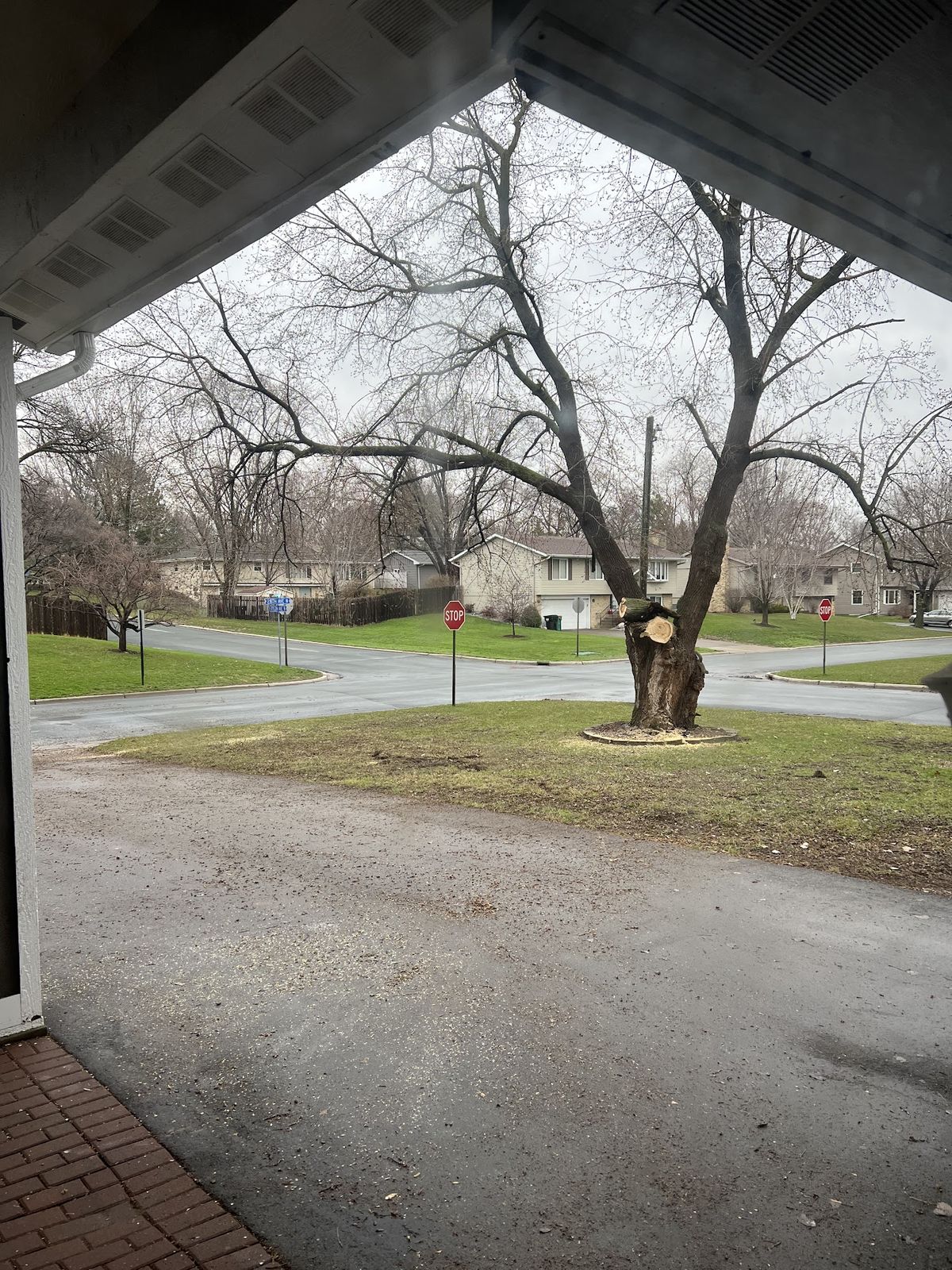
A third of our boxelder tree fell down this morning, narrowly missing the house. He was out within an hour and the cleanup and removal was done in less than two.
When to Prune in Minnesota
Late winter is the best time for most trees: no leaves in the way, fewer insects and diseases around, and the cuts close fast once spring growth starts. A few trees have their own calendar.
Most TreesLate in the dormant season
OaksOak wilt risk
Ash TreesEmerald ash borer is inactive
Maples and BirchThey drip sap in late winter
Apples and CrabapplesBefore fire blight season
Lilacs and Spring BloomersRight after they flower
Oak Wilt
Fresh cuts on an oak from April through July draw the beetles that carry oak wilt, and red and pin oaks can die within weeks. If an oak has to be cut in that window, the wound gets painted right away.
Dead and Broken Branches
These don’t wait for the calendar. A broken limb hanging over the house or the driveway can come down any time of year.
Too Cold to Cut
Below about 25°F, wood turns brittle and tears instead of cutting cleanly, so the coldest days of January are better spent waiting.
Sources: University of Minnesota Extension, Minnesota DNR, City of Brooklyn Park.
- 1Undercut, about a third of the way through
- 2Top cut, a little farther out, drops the limb
- 3Final cut, just outside the collar
The Right Cut
Every branch has a collar, the slight swelling where it joins the trunk. That’s where the tree grows new wood over a wound, so it’s where the final cut goes: not flush against the trunk, and not out on the branch leaving a stub.
A heavy limb gets three cuts. The first two take its weight off, so the bark can’t peel down the trunk when it drops. The third is the clean one at the collar.
Good cuts don’t need wound paint, oaks in oak wilt season being the exception. And we never take more than about a quarter of a tree’s leaves in one season, because it needs them to recover.
Jake knows his craft and will take care of you and your property. Friendly, efficient and on budget.
Flush Cut
Cuts into the trunk itself, leaving a bigger wound that’s slow to close and easy for decay to get into.
Stub Left Behind
The tree can’t grow over a stub, so it dies back and rots, sometimes into the trunk.
At the Collar
A small, round wound. Over the next few years the tree rolls new wood in from the edges and seals it.
Tree Trimming Questions
How Often Should My Trees Be Pruned?
Young trees do best with a light pruning every two to three years while they take shape. Mature trees usually need it every three to five years, sooner after a storm or if dead wood shows up. We’ll tell you what your trees need, and if the answer is nothing yet, we’ll say so.
How Much Does Tree Trimming Cost?
It depends on how big the tree is, how much comes off, how close it is to the house or lines, and whether a bucket truck can reach it. That’s why every estimate is free and done in person.
Can You Trim Branches Near Power Lines?
Branches near the lines on the poles are your electric utility’s to clear, and only specially trained line-clearance crews may work close to them, so call the utility first. Stay away from any branch touching a wire.
Will Pruning Hurt My Oak?
Not when it’s done between November and March. From April through July, fresh cuts can let in oak wilt, so we leave oaks alone then unless a broken branch has to come down.
Can You Make My Tree Smaller?
Yes, by shortening limbs back to healthy side branches. That keeps the tree’s shape and health. What we won’t do is top it, because that leaves a weaker, more dangerous tree. If it’s simply too big for its spot, we’ll talk through removal with you.
Do You Clean Up the Branches?
Every time. We haul away the branches and rake up the yard before we leave.
Have Trees That Need Trimming?
Estimates are free. Tell us about your trees and we’ll set up a time to come take a look.